The latest update in the legal battle between California and the US Department of Transportation.
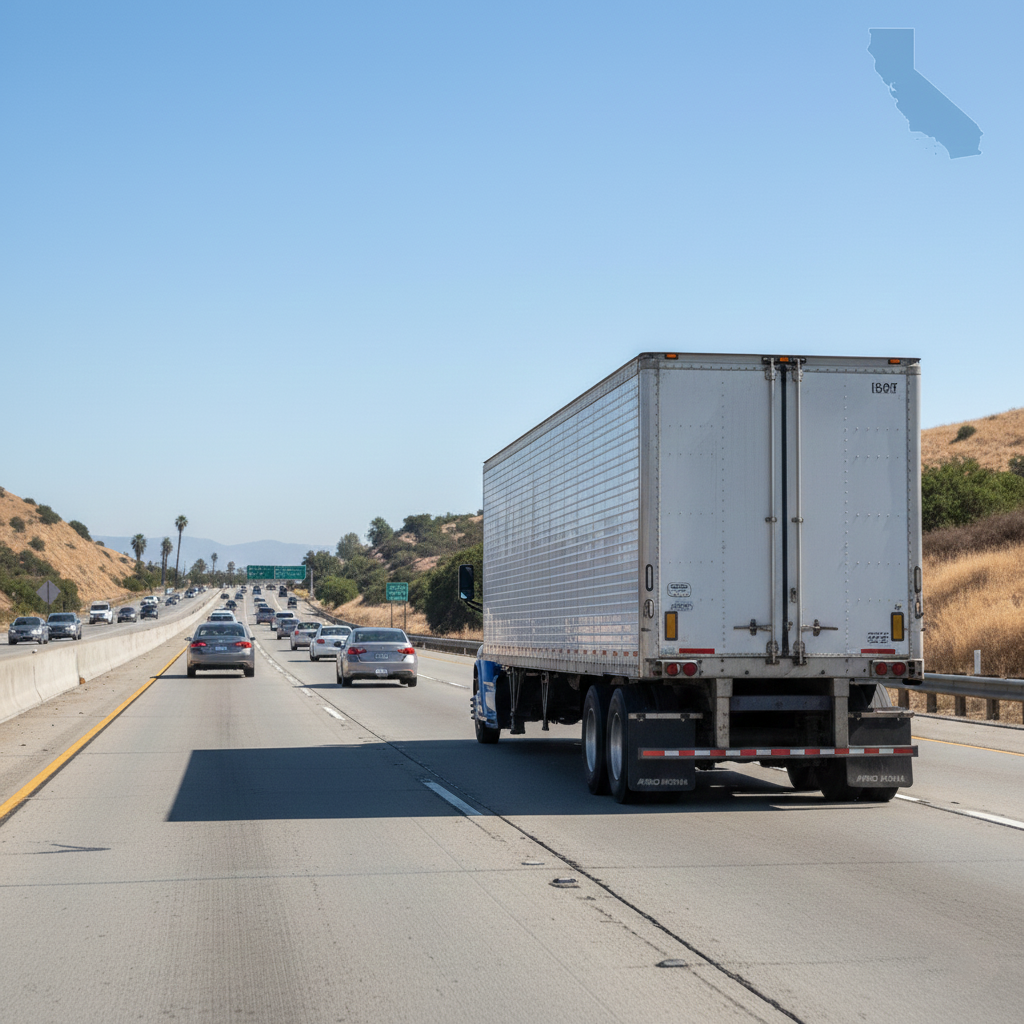
Commercial drivers in California remain uncertain as the state announced a pause on plans to re-issue non-domiciled commercial driver's licenses to over 17,000 immigrant workers. The action is a reversal of a decision on December 17 to re-issue the licenses, and is part of a larger legal battle between California and the US Department of Transportation over who should be qualified to drive commercial vehicles.
What is a Non-Domiciled Commercial Driver's License?
A non-domiciled commercial driver's license (CDL) is a license typically issued to individuals who are legally present in the US but who are not US citizens or permanent residents. Those who qualify with specific visas or certifications can take driving tests and apply for a commercial driver's license. The non-domiciled CDL is functionally identical to a standard CDL and holders can obtain endorsements in the same way.
The Legal Battle So Far
Following an executive order on April 28 of this year to address safety concerns, the Trump Administration directed the Department of Transportation to review non-domiciled CDLs and how they are issued on the state-level. The order also emphasized enforcing English Language Proficiency (ELP) as a requirement to operate a commercial vehicle.
On May 20, US Department of Transportation Secretary Sean P. Duffy signed an order to place drivers out-of-service if they cannot display proficiency in English. On June 27, Secretary Duffy announced an audit of how states issue non-domiciled CDLs. The Federal Motor Carrier Safety Administration (FMCSA) would review state procedures for issuing non-domiciled CDLs and report potential instances of non-compliance.
On August 28, while the non-domiciled CDL audit was still underway, Secretary Duffy stated that the FMCSA found California to be non-compliant with ELP enforcement.
On September 25, Alicia Fowler, General Counsel of the California State Transportation Agency responded to the FMCSA in a letter stating that California has been compliant with federal safety standards and language proficiency and added that California CDL holders were involved in fatal crashes at a rate almost 40% lower than the national average.
On September 26, Secretary Duffy announced an emergency action to restrict eligibility for non-domiciled CDLs. Citing findings from their audit, the FMCSA described a pattern of issuing non-domiciled CDLs that expire long after a driver's work authorization expires.
The California DMV released a statement indicating that starting on September 29, they could not issue or renew non-domiciled CDLs. Despite this action, on October 15, Secretary Duffy threatened to withhold approximately $40 million in federal funds from California over failure to enforce ELP standards.
November 6, the California DMV notified non-domiciled CDL holders that their licenses would be cancelled after 60 days. However, on November 13, the US Court of Appeals for the District of Columbia Circuit issued a stay of Secretary Duffy's CDL restrictions to review the case of Jorge Rivera Lujan, an owner-operator who holds a non-domiciled CDL.
Following this stay on restricted CDLs, California was positioned to reissue non-domiciled CDLs, leading them to make their announcement on December 17. Citing pressure from the Trump administration, the California DMV announced a pause to this plan on December 19.
The Legal Landscape Now
California took action against the Trump administration on Dec 12, filing a lawsuit against the Department of Transportation, the FMCSA, and Secretary Duffy over $33 million of the withheld federal funds. Reiterating that California enforces English language standards in line with federal regulations, the state described the funding cut as "arbitrary."
While there has not yet been a direct response from the Trump administration or the Depart of Transportation, the Department of Transportation is still taking action against other states like New York and Colorado over CDL issuance, threatening to withhold federal funding to them as well.
Depending on the outcome of the lawsuit, ELP enforcement and non-domiciled CDL issuance may shift radically. With California's plan to re-issue non-domiciled CDLs paused two days after its announcement, it is unclear whether the 17,000 license holders in the state will be qualified to operate a commercial vehicle on January 6, 2026.
You can follow Sky Transport Solutions for updates on CDL requirements and ELP enforcements.