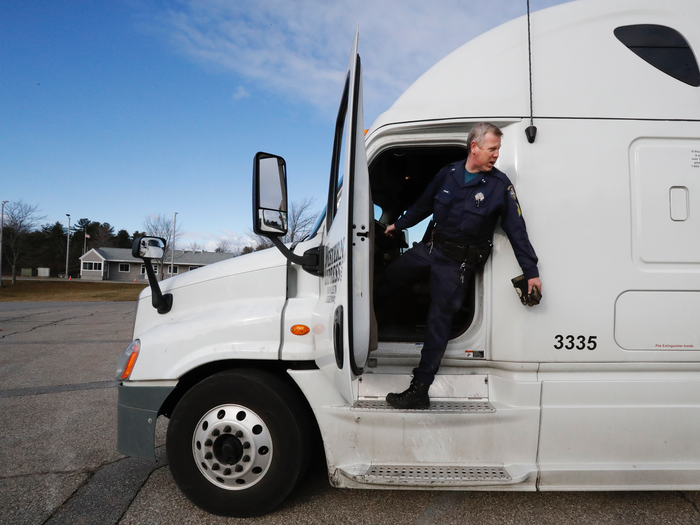
An out-of-service order is a serious action taken by the Federal Motor Carrier Safety Administration (FMCSA). When a carrier receives this order, they must stop operating commercial vehicles immediately. Understanding why these orders happen and how to prevent them is essential for every carrier.
What is an Out-of-Service Order?
An out-of-service (OOS) order is a directive from the FMCSA that requires a motor carrier, driver, or vehicle to stop operating due to serious safety violations. These orders are issued to protect public safety and ensure carriers follow federal regulations.
When a carrier receives an out-of-service order, they cannot operate commercial motor vehicles until the issues are resolved and the order is lifted. Violating an out-of-service order can result in severe penalties, including fines up to $32,208 for carriers and up to $1,951 for drivers.
Common Reasons for Out-of-Service Orders
1. Unsatisfactory Safety Rating After Compliance Review
During a compliance review, FMCSA inspectors examine a carrier's safety management systems. If a carrier fails in multiple safety areas, they receive an "Unsatisfactory" safety rating. The carrier must then fix all identified problems within a specific time period (typically 45 to 60 days, depending on the carrier type).
If the carrier does not complete the required corrective actions within the deadline, their DOT number will be placed out of service.
How to Prevent This: Maintain proper records and safety programs at all times. This includes driver qualification files, drug and alcohol testing records, driver training documentation, hours of service records, and vehicle maintenance files. Regular internal audits can help identify problems before an FMCSA review.
2. Failure to Pay Civil Penalties
If the FMCSA issues a civil penalty (fine) after a compliance review, investigation, or audit, and the carrier does not pay it, an out-of-service order will be issued. Penalties can become very large when multiple serious violations are found, such as:
- Using drivers without valid commercial driver's licenses
- Using unqualified drivers
- Missing or incomplete drug and alcohol testing programs
- Using drivers who failed drug tests without completing the return-to-duty process
- Falsifying logs or other required documents
How to Prevent This: Follow all FMCSA regulations consistently. If violations are found during a review, address them immediately and pay any penalties promptly. Working with compliance experts can help reduce penalties and prevent future issues.
3. Imminent Hazard Declaration
An imminent hazard declaration is issued when a carrier's operations pose an immediate and serious threat to public safety. This can happen when:
- A carrier commits serious or repeated violations
- A crash occurs and a post-crash investigation reveals major compliance problems
- A carrier shows a pattern of ignoring safety regulations
Imminent hazard orders take effect immediately and require the carrier to stop operations right away.
How to Prevent This: Maintain strict compliance with all safety regulations. Regular training, proper maintenance, and following hours of service rules help prevent the serious violations that lead to imminent hazard declarations.
4. Refusing to Participate in Compliance Reviews or Safety Audits
All new carriers must complete a safety audit within their first 18 months of operation. Additionally, carriers may be selected for compliance reviews or investigations at any time. If a carrier refuses to participate, ignores notifications, or fails to provide required documents, the FMCSA will begin the process of placing the carrier out of service.
How to Prevent This: Always respond promptly to FMCSA communications. If you receive a notice, verify it's legitimate by contacting your local FMCSA office or state motor carrier enforcement office. Then, provide all requested information and documents on time. Being prepared and cooperative can make the process much smoother.
5. Operating Without Proper Registration
Carriers must maintain proper FMCSA registration and operating authority. Operating without the required registration or with a suspended license will result in an out-of-service order.
How to Prevent This: Keep all registrations current and renew them before expiration dates. Monitor your carrier status regularly through the FMCSA's systems.
Consequences of Out-of-Service Orders
Violating an out-of-service order has serious consequences:
- Financial Penalties: Carriers can face fines up to $32,208 per violation. Drivers may be fined up to $1,951.
- Loss of Operating Authority: Continued violations can lead to permanent revocation of operating authority.
- Increased Scrutiny: Carriers under out-of-service orders are closely monitored by enforcement agencies.
- Insurance Issues: Insurance premiums may increase significantly, and some insurers may refuse coverage.
- Business Impact: Customers may refuse to work with carriers that have been placed out of service.
The FMCSA uses the PRISM (Performance and Registration Information Systems Management) program to help state agencies identify and stop carriers operating under out-of-service orders. State and federal inspectors also conduct roadside checks to ensure compliance.
How to Check Your Carrier Status
You can check if your carrier or another carrier is under an out-of-service order through the FMCSA's Safety and Fitness Electronic Records (SAFER) system. This online database provides searchable information about carriers, including their current safety status and any active out-of-service orders.
Preventing Out-of-Service Orders: Best Practices
Following these practices can help you avoid out-of-service orders:
- Maintain Daily Compliance: Follow all FMCSA regulations every day, not just when inspections are expected.
- Keep Accurate Records: Maintain complete and organized files for drivers, vehicles, and safety programs.
- Conduct Regular Internal Audits: Review your operations regularly to find and fix problems before FMCSA inspections.
- Train Your Team: Ensure all employees understand safety regulations and their responsibilities.
- Maintain Your Vehicles: Keep all commercial vehicles in safe operating condition through regular maintenance.
- Monitor Your Safety Rating: Check your CSA (Compliance, Safety, Accountability) scores regularly and address any issues.
- Respond Promptly: Always respond quickly to FMCSA communications and requests.
- Pay Penalties on Time: If you receive a fine, pay it promptly to avoid additional enforcement actions.
Conclusion
The best way to avoid an out-of-service order is to maintain compliance with FMCSA regulations every single day. This approach does two important things: First, it prevents the violations and crashes that trigger compliance reviews. Second, it ensures that when FMCSA or state enforcement officials visit, your carrier will pass inspection.
Remember, out-of-service orders are serious but preventable. By staying informed, maintaining proper records, and following regulations consistently, you can protect your business and keep your operations running safely.
Resources and Additional Information
- FMCSA SAFER System: Check carrier safety ratings and out-of-service status at ai.fmcsa.dot.gov
- PRISM Program: Learn about the Performance and Registration Information Systems Management program at ai.fmcsa.dot.gov/prism
- FMCSA Regulations: Access the complete Federal Motor Carrier Safety Regulations at fmcsa.dot.gov/regulations
- Out-of-Service Orders Database: Search for carriers currently under out-of-service orders through the SAFER system